Featured Events
All News

Tracking the State in Mesopotamia (and Elsewhere)
In recent years archaeologists have turned from certain disco-age preoccupations of defining an essentialized ancient state and identifying the (earliest) states in the archaeological record to more modern concerns, under the influence of practice theory and actor-network theory, about what the state does. This talk will move toward an even newer research question of what the state does not do. In Mesopotamia such studies consider in what ways people were and were not subjects of the Crown, why cities resisted incorporation in territorial polities, why ethnic groups were trouble-makers, and why the countryside was unruly. A brief comparison with other early states is also offered.
Early Cities 4000 BCE-1200CE Introduction
Early Cities 4000 BCE-1200CE Conclusion
Norman Yoffee-The Limits of Power
Continue Reading Tracking the State in Mesopotamia (and Elsewhere)
Social and ecological effects on the genome: lessons from baboons and rhesus macaques
The social environment can have profound effects on individual fitness in primate societies. However, the mechanistic basis for these effects is not well understood. Part of the answer may lie in changes that occur at the level of the genome. I will present three vignettes illustrating work in my lab aimed at investigating this possibility. To study the effects of social status, we experimentally manipulate dominance rank in captive female macaques. In this context, dominance rank leads to pervasive changes in gene regulation, such that relative rank can be predicted based on gene expression signatures alone. Sensitivity to dominance rank is particularly great for cells and genes involved in innate immunity. To understand its evolutionary significance, we also investigate gene regulatory variation in wild baboons. Here, we have tested the hypothesis that environmental variation drives epigenetic changes in DNA methylation. In baboon males, resource availability is significantly associated with DNA methylation levels, and we have shown that some of these differences drive variation in gene expression levels using experimental transfection assays. Interestingly, a persistent signature of resource limitation, but not resource abundance, can be detected in these data, suggesting limits to the plasticity of resource-associated methylation patterns. Finally, we also study the impact of social relationships on the “extended genome” encoded by the gut microbiome. Our results show that social group membership and social network structure predict gut microbiome composition in the baboons. These patterns are not explained by diet, kinship, or environmental exposure. Instead, social relationships appear to directly affect microbiome transmission, with potentially important ramifications for individual health and the evolution of group living.
Microbiome Composition in Wild Baboons article
Rhesus Macaque Immune System article
Continue Reading Social and ecological effects on the genome: lessons from baboons and rhesus macaques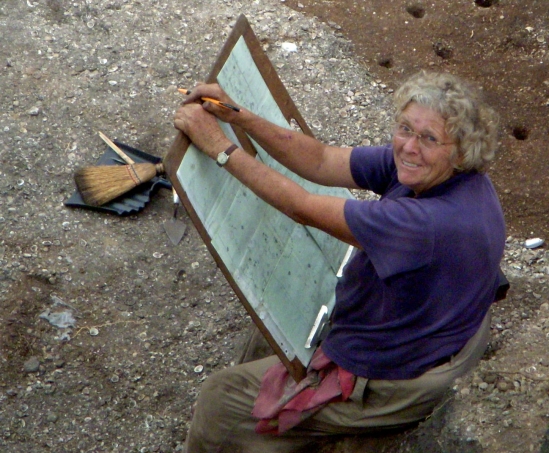
Professor Emerita Barbara Voorhies Receives Gender Equity Award
Barbara Voorhies didn’t set out to level the playing field in anthropology, but her colleagues — and a gender equity award — suggest she accomplished exactly that.
Barbara Voorhies didn’t set out to level the playing field in anthropology, but her colleagues — and a gender equity award — suggest she accomplished exactly that - See more at: http://www.news.ucsb.edu/2015/014979/accidental-feminist#sthash.I59mk7uz.dpufBarbara Voorhies didn’t set out to level the playing field in anthropology, but her colleagues — and a gender equity award from the American Anthropological Association — suggest she accomplished exactly that.
Continue Reading Professor Emerita Barbara Voorhies Receives Gender Equity Award
Pizza Talk: Steve Gaulin -Good Fat / Bad Fat 2.0: A worsening dietary mismatch with dramatic effects on cognitive function
Abstract: Rapid environmental change can cause adaptive mismatch and dietary mismatches may explain some chronic disease patterns in Westernized populations. Current dietary imbalances of neurologically important omega-3 and omega-6 fats are evolutionary novel and predicted to compromise brain function. We use nations as the units of analysis, the fatty acid profile of human milk as an index of omega-3/omega-6 supply (after metabolic competition between them), and average PISA performance (three tests over the two most recent administrations) as a measure of cognitive performance. With both milk and PISA data available for 28 countries, DHA (the most neurologically important omega-3) and linoleic acid (the most abundant and hence competitive omega-6) jointly explain 48% of the variance in cognitive performance. No additional variance is explained by important socio-economic variables such as per capita gross domestic product and per-student expenditures on public education. Causes and possible solutions to this dietary mismatch will be discussed.
Professor Gaulin is a biological anthropologist with special interests in the force of sexual selection in human evolution and in evolution of psychological mechanisms. He has several current research initiatives: the evolution of female fat metabolism and associated male mating preferences; sex differences in the human voice; sex differences in spatial cognition; and the role of immune factors in human mating.
Department Potluck & New Grad Student Welcome
Join us for our annual Department Potluck Picnic and meet the new Graduate Students. Catch up with colleagues. Swap summer field season stories. Enjoy good food and great company!
Continue Reading Department Potluck & New Grad Student WelcomeHormones in the Crosshairs
UCSB anthropologists find that among Tsimane men, successful hunting boosts testosterone and cortisol levels.
Continue Reading Hormones in the Crosshairs